Social TV dethrones streaming: Why creators are the new studios
Gen Z prefers creator content over streaming. Learn how TikTok/YouTube disrupt Hollywood with authentic storytelling and AI-driven engagement.
The Direct Answer
Social TV, creator-led entertainment distributed via platforms like YouTube and TikTok, has surpassed traditional streaming in Gen Z viewership by leveraging authenticity, algorithmic intimacy, and interactive storytelling. Gen Z now spends 50+ daily minutes with creator content versus 44 minutes on streaming services, permanently shifting entertainment power from Hollywood studios to individual creators.
Why Social TV Won Gen Z’s AttentionAuthenticity Over Production Value
Gen Z chooses creators like MrBeast or Emma Chamberlain because their unfiltered storytelling, their bloopers feel more relatable than polished studio productions. 56% of Gen Z find creator content "more relevant" than traditional shows, citing raw narratives and approachable hosts as key drivers. This authenticity gap explains why Netflix’s $30M-per-episode shows lose to TikTok series filmed on iPhones.
Algorithmic Intimacy Drives Discovery
Social platforms deploy AI that learns viewer preferences at lightning speed. TikTok’s algorithm tracks micro-behaviors (rewatches, screenshot timing) to serve hyper-personalized content within 24 hours. By contrast, streaming algorithms rely on broad genres and lagging viewing history. This creates a "personalization gap": creators achieve 3x faster content calibration than studios, turning passive viewers into engaged communities.
The Interactivity Advantage
Social TV thrives on two-way participation. Twitch streamer Kai Cenat hosts live choose-your-own-adventure shows where viewers dictate plot twists via polls. YouTube’s Hot Ones integrates real-time fan questions into celebrity interviews. This interactivity generates 5x more comments than streaming content. Studios like Warner Bros. added chat features to HBO Max but only boosted engagement 12%, proving interactivity can’t be retrofitted.
How Creators Built Their Studio EmpiresThe Blueprint: Low Cost, High Speed
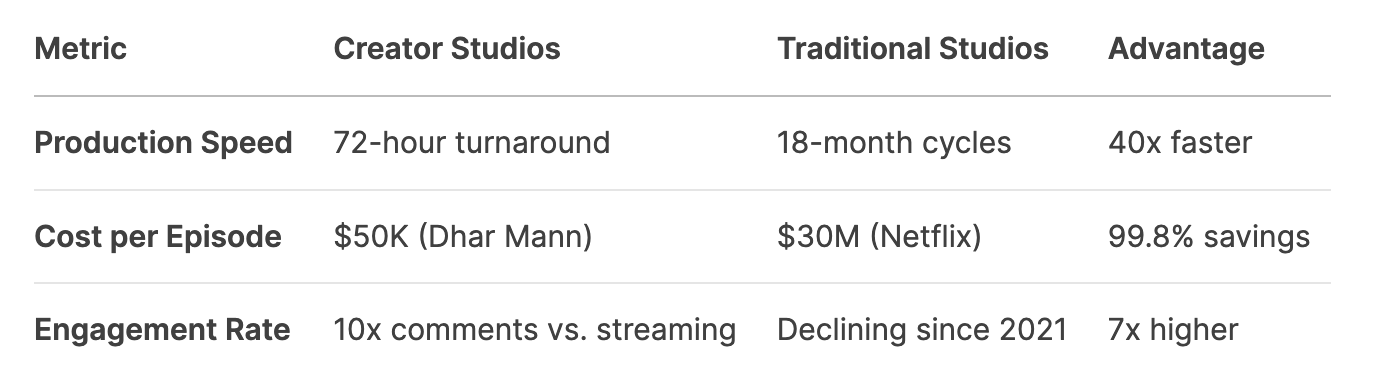
Creator studios like Dhar Mann’s repurpose airplane fuselages into film sets and use apartment furniture as props, operating at 1/100th of studio budgets. This efficiency stems from zero corporate overhead, direct brand integrations (e.g., Shopify sponsorships), and community-sourced ideas.
Monetization Mastery- Ad-Split Dominance: Creators keep 55-70% of YouTube ad revenue vs. studios’ 15-30% share on streaming platforms.
- Hybrid Funding: MrBeast funds $5M/episode shows via YouTube’s $70B creator payout pool, Patreon subscriptions, and experiential commerce (e.g., selling video props).
- Strategic Licensing: Tubi licenses YouTube-born franchises like Alan’s Universe, paying creators upfront while amplifying their reach.
Studios Fight Back (And Why They’re Losing)Flawed Adaptation Strategies- FAST Channel Limitations: Free ad-supported TV (e.g., Pluto TV) grew 30% but draws only 12% of Gen Z due to lacking interactivity.
- AI Misalignment: Studios use AI for cost-cutting (automated editing), while creators deploy it for personalization (e.g., ChatGPT-generated video endings).
The Bundling Illusion
Flawed Adaptation Strategies- FAST Channel Limitations: Free ad-supported TV (e.g., Pluto TV) grew 30% but draws only 12% of Gen Z due to lacking interactivity.
- AI Misalignment: Studios use AI for cost-cutting (automated editing), while creators deploy it for personalization (e.g., ChatGPT-generated video endings).
The Bundling Illusion
Streaming bundles (Disney+/Hulu/ESPN+) aim to retain subscribers but ignore Gen Z’s preference for experiences over access. As Deloitte notes: "Younger generations would rather pay for a creator’s Patreon than a Netflix subscription".
The Future: Fragmentation & Hybrid Models2027 Projections- AI Co-Creation: Tools like LTX Studio let fans generate spinoff scenes from creator universes, blurring lines between audience and producer.
- Retail-Entertainment Fusion: Walmart’s Vizio acquisition will embed shoppable creator content into smart TVs, targeting $50B in social commerce by 2027.
- Regulatory Showdowns: FTC lawsuits loom as studios pressure platforms to limit creator revenue shares.
Survival Tactics for Traditional Players- Repurpose IP for Social: Turn Stranger Things scenes into TikTok puzzles with fan-dictated outcomes.
- Hire "Community Architects": Experts in translating audience feedback into content (e.g., Duolingo’s viral Twitter manager).
- Adopt Creator Tools: Use CapCut’s AI editing or Riverside.fm for multi-platform recording.
- AI Co-Creation: Tools like LTX Studio let fans generate spinoff scenes from creator universes, blurring lines between audience and producer.
- Retail-Entertainment Fusion: Walmart’s Vizio acquisition will embed shoppable creator content into smart TVs, targeting $50B in social commerce by 2027.
- Regulatory Showdowns: FTC lawsuits loom as studios pressure platforms to limit creator revenue shares.